On this day Jess taught us about 6 of the 12 principles of animation, and gave us examples + activities to do to show how they’re applied:
- Squash and Stretch: gives the impression of weight and volume (the more squash + stretch, the more plasticity the character has). The mass of the character must stay the same.
- E.g. when a character jumps, they squash when they reach the point of contact, and stretch just before and after.
- Anticipation: The beat before a key action takes place.
- E.g. when a character is kicking a ball into the goal, they would bring the foot back (anticipation) before leg continues onto the trajectory and then kicks the ball (action).
- Follow through + overlapping action:
- Follow through: when an action stops there are elements (usually those that don’t have muscles but are still an extension of the action/character) that often continue moving after.
- Overlapping action: when different parts of a character/object move at different times/rates.
- Examples of both include hair and clothes.
- Ease in/ease out
- When there are more frames at the beginning/end of an action to decelerate the movement, and fewer frames in the middle to accelerate it (makes actions more believable).
- More ease = for softer movement (e.g. scooching back, typical motor reactions)
- Less ease = for abrupt movement (e.g. flinch, reflex reactions)
- Arcs (I dislike this principle so much)
- Have every character move in a circular path rather than a straight, lifeless line. Used mostly for “floaty” effects.
- For some reason, to me this principle is more difficult to describe or give an example for unless it’s the character very literally moving a part of their body in an arc shape. I don’t really know how I can apply this principle to everything.
- Secondary action
- Not to be confused with follow through/overlapping action as it isn’t a part of the character at all. It is usually an entirely different object/character that moves in tandem with the main action/character, adding more life to a scene without detracting anything from it.
- E.g. a character is cooking. The act of cooking = main action, the ingredients used = secondary action.
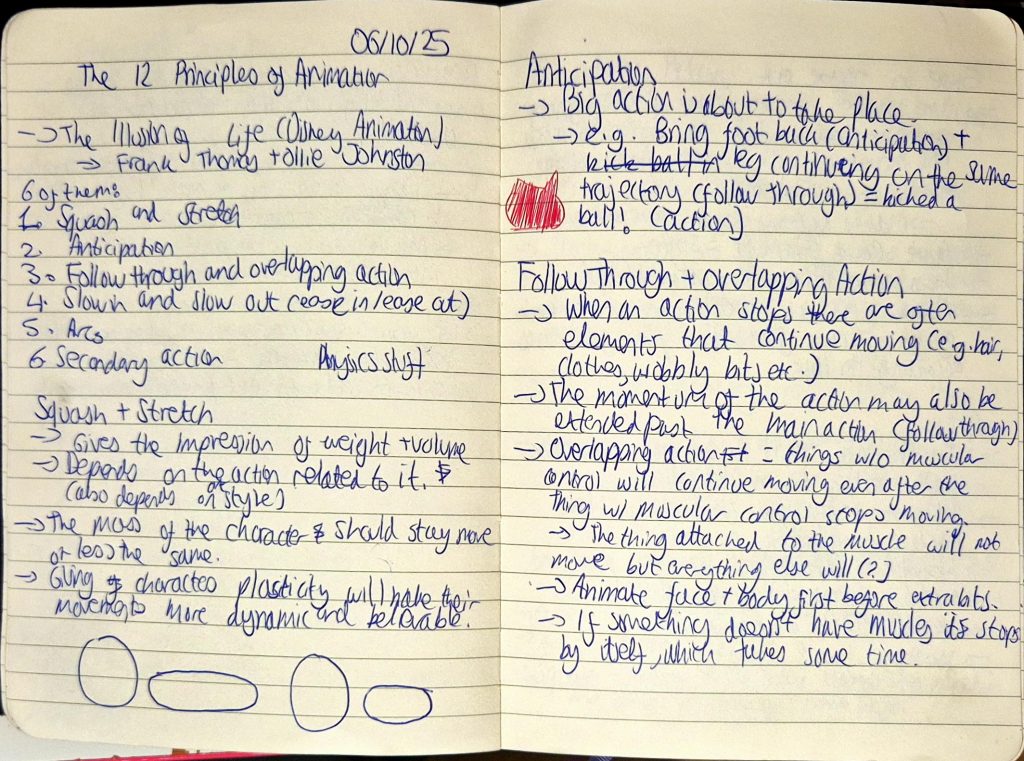
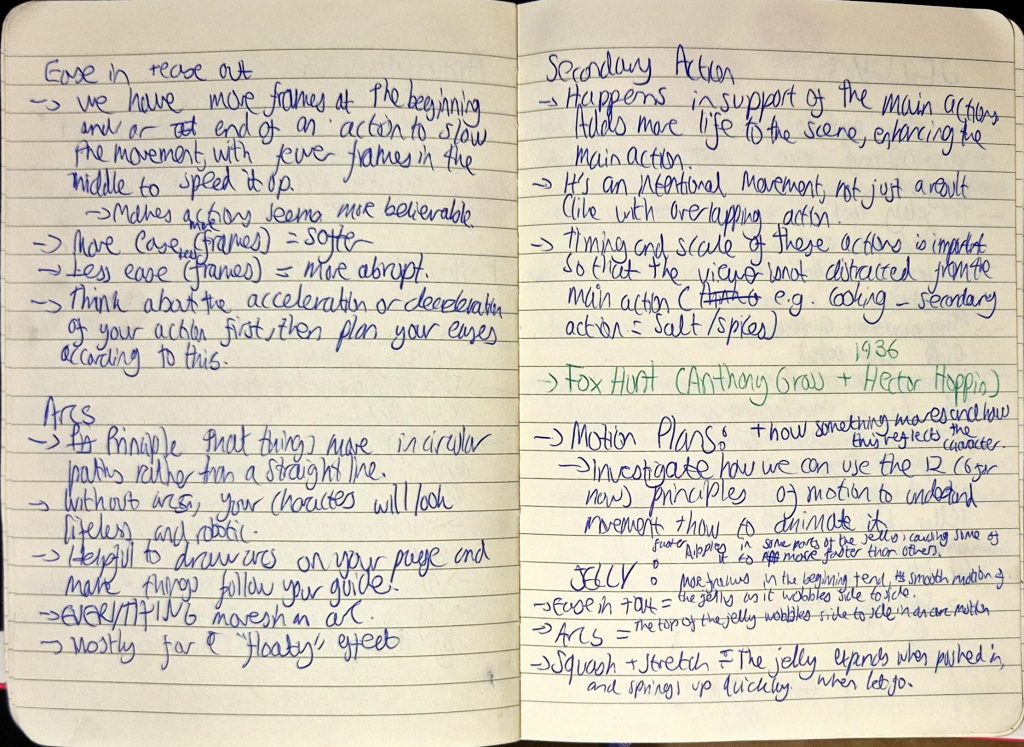
My notes
Afterwards, we learnt about what motion plans were and how to apply the principles of animation that we were taught so far to examples shown. The intention behind the activity was to enhance how we explain the feeling of the movement to someone who has never seen the animation before (useful during a project/concept pitch) using the 12 principles of animation to do so. This activity was confusing at first as I didn’t understand what to write, and how to use the principles to explain how objects (in this case jelly) move. I did end up writing notes, as shown below (for both the jelly and pigeon examples):
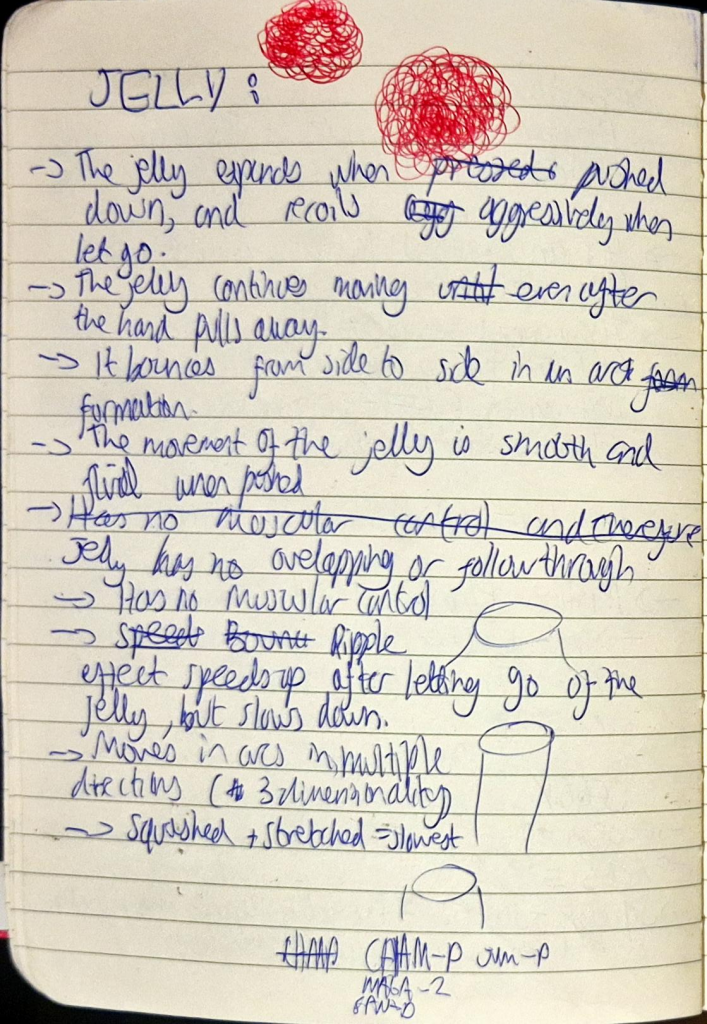
Jelly motion plan rough notes
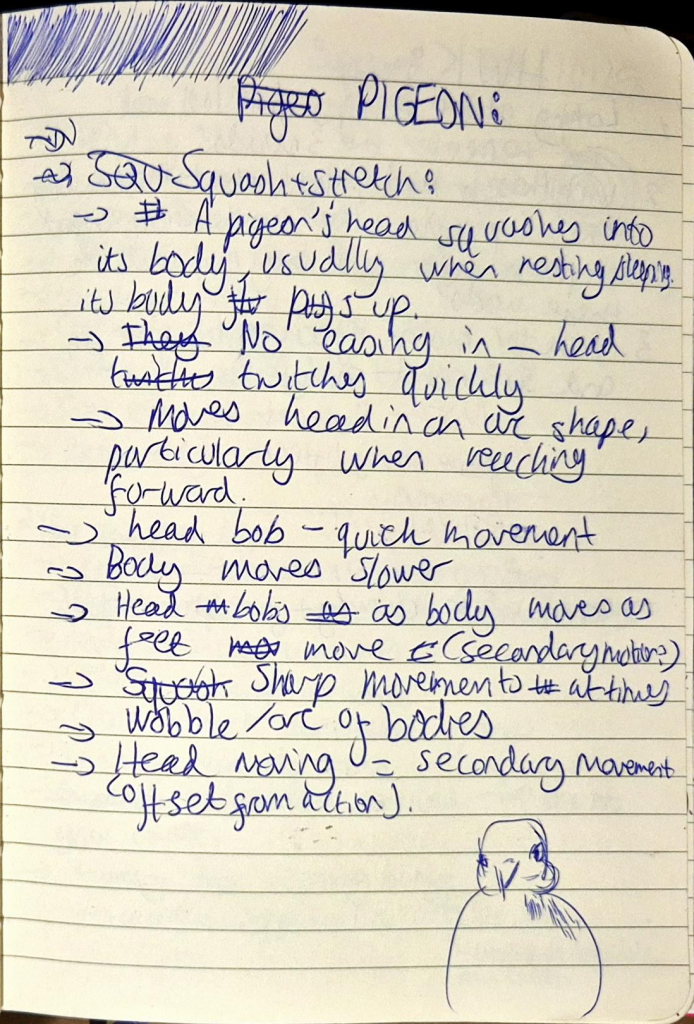
Pigeon motion plan rough notes
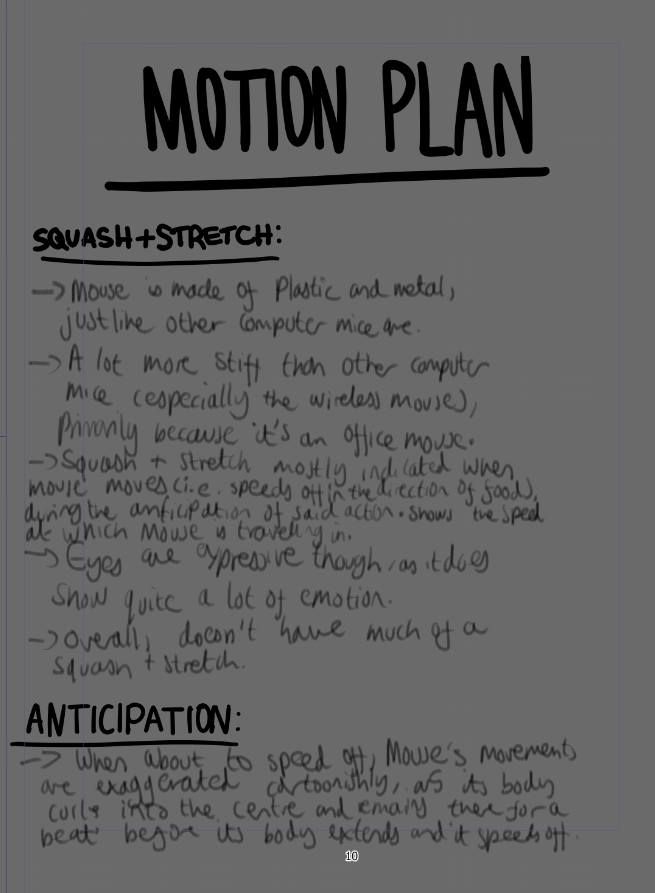
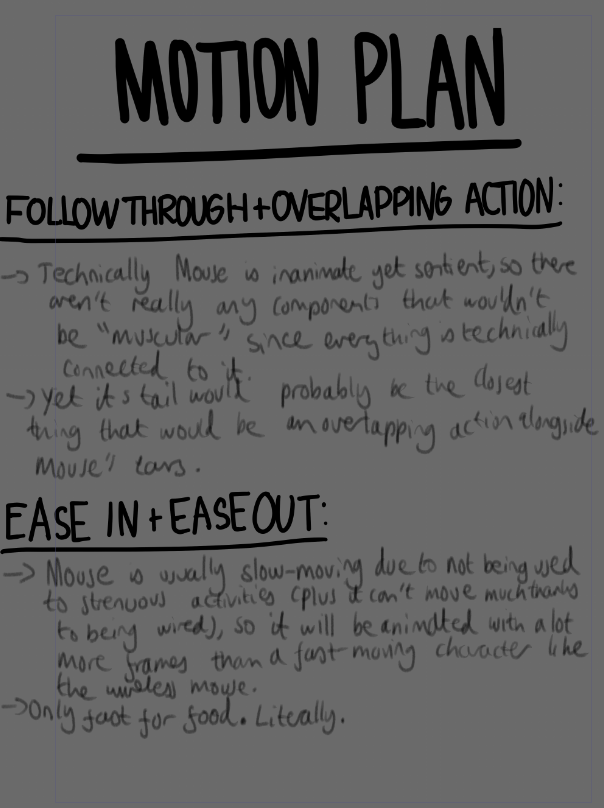
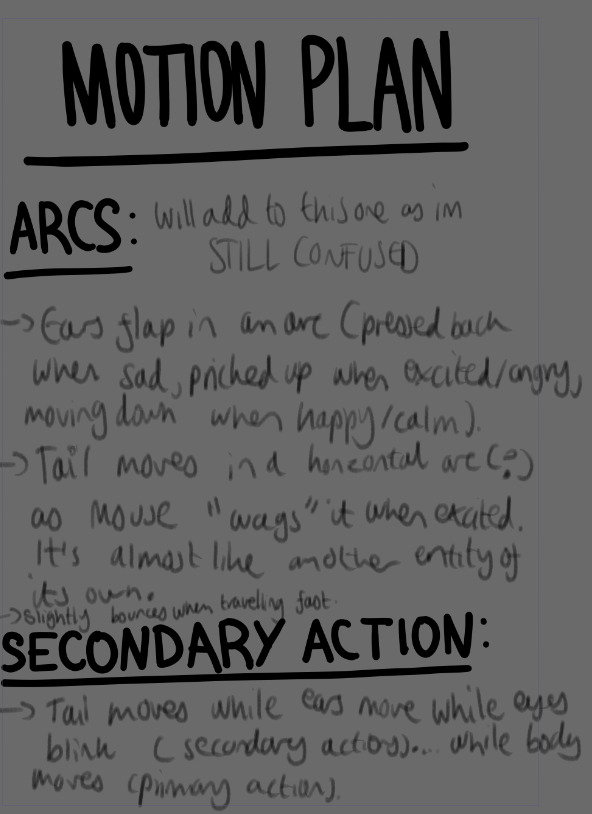
For homework, we had to begin our motion plans and write about how the 6 principles that we’ve learned so far are implemented into the movement and behaviour of our respective characters, using motion references as visual evidence.
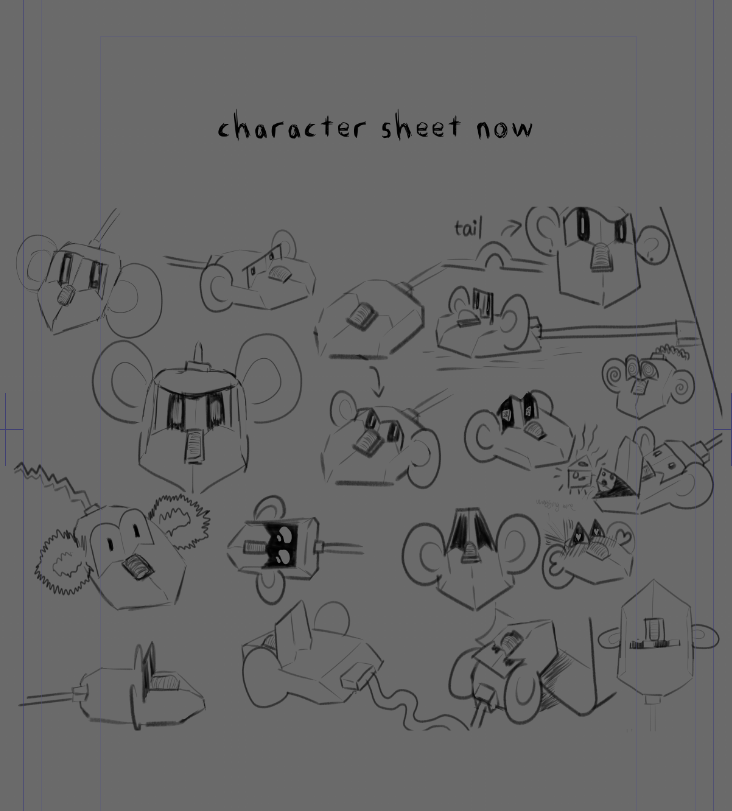
In the meantime, I took one of Mouse’s designs from the character sheet I created and added colour to it to see how it would look. I didn’t use cel shading (It didn’t look good during my first attempt at colouring Mouse, which will be shown below), and ended up using the airbrush and soft eraser tools to create a softer look (that doesn’t detract from the overall materiality of Mouse).
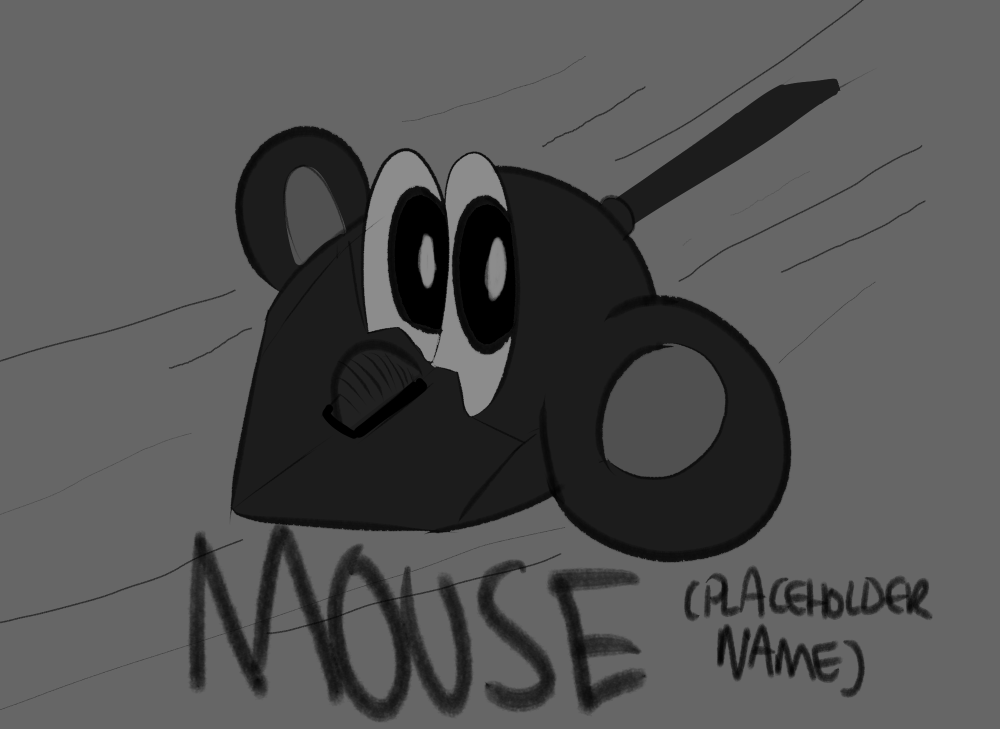
(Mouse using cel shading before redesign)
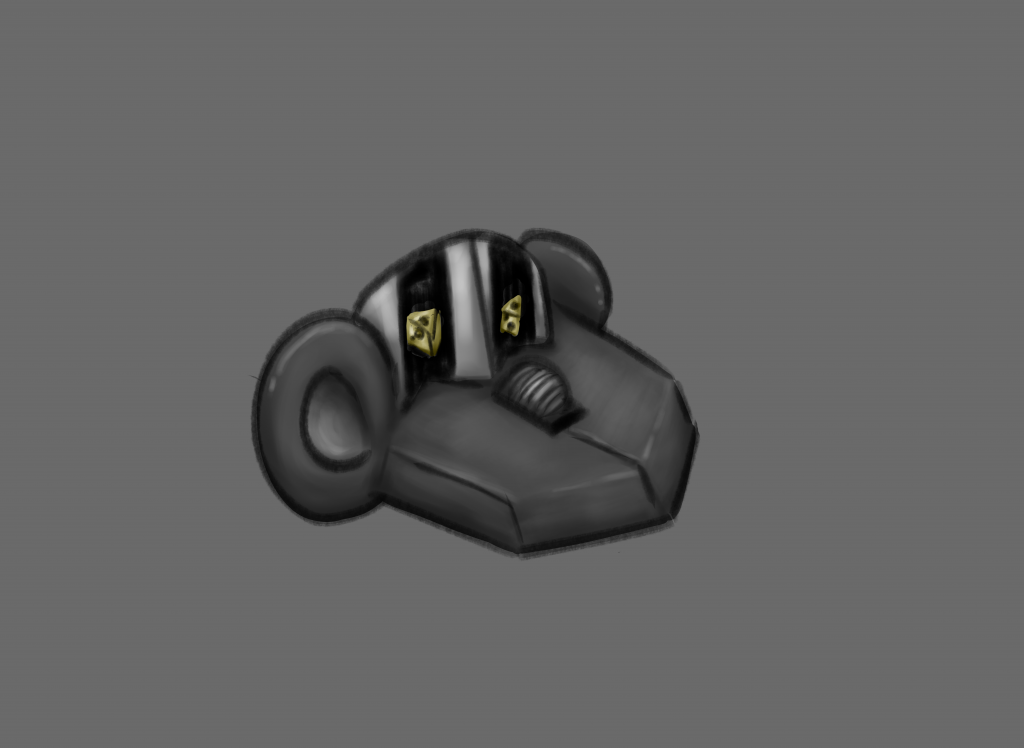
(Mouse using typical soft shading)
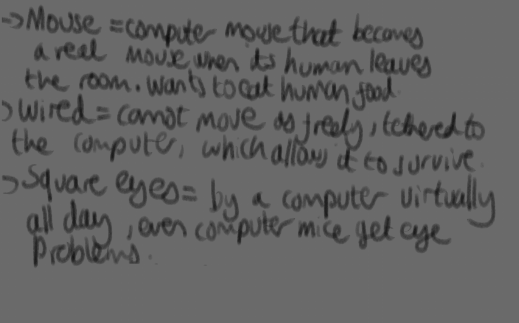
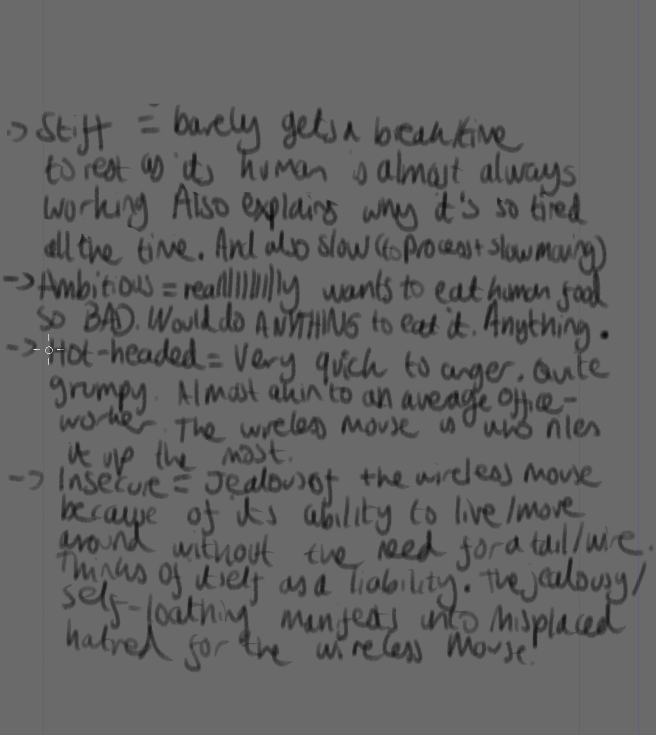
I wanted to use Clip Studio Paint’s comicbook feature to write down my motion plan then copy and paste onto Google Slides, but it ended up taking a while to format so I stuck to just using Google Slides. These were the pages I made up until that point:
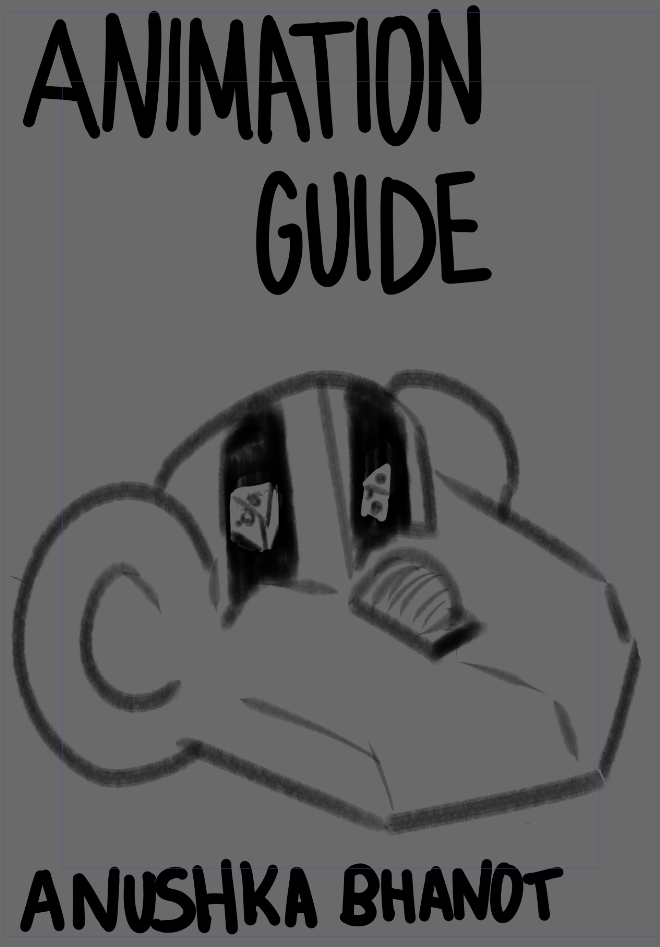
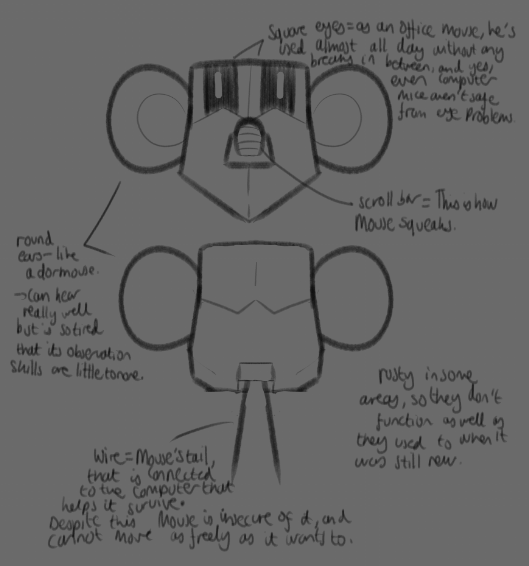
Motion plan Clip Studio Paint
Leave a Reply